
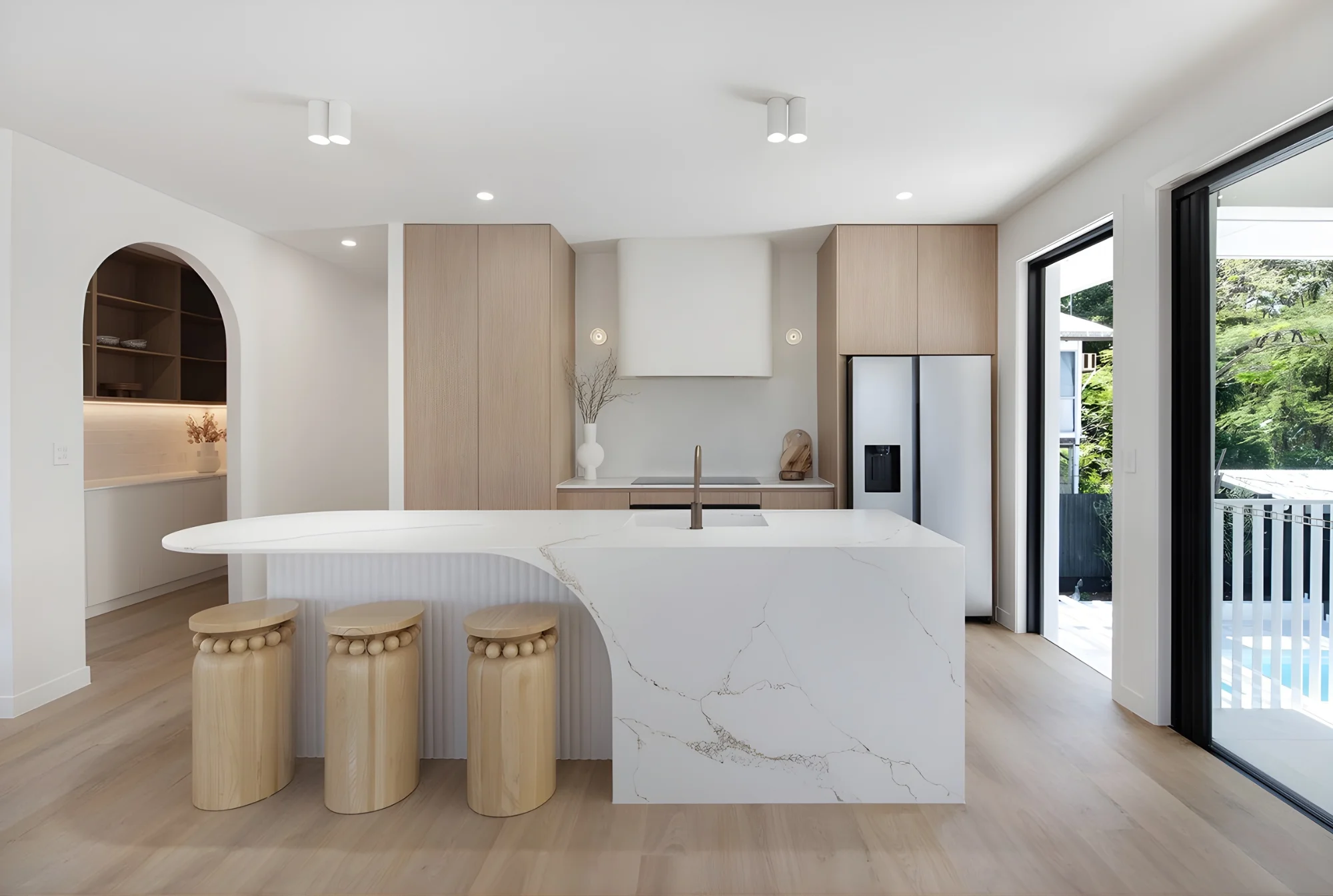
The Engineered Stone Ban: What It Means For Your Kitchen
What changed in 2024, what it means for the benchtop you already have, and what you can choose now.
If you have an engineered stone benchtop, you do not need to rip it out. If you are planning a new one, the rules have changed, and so have the materials. Here is the plain-English version.
Since 1 July 2024, Australia has banned the manufacture, supply, processing and installation of engineered stone benchtops, panels and slabs. Benchtops already installed are safe to keep and use. For a new kitchen, you choose from crystalline silica-free surfaces, porcelain or natural stone instead.
Kitchen & Home Renovations Co. (KAHR Co.) has been replacing and installing benchtops across Sydney for 35 years. Since the ban came in, it is the question we hear most in the Taren Point showroom: is my benchtop dangerous, and what can I have now? This guide answers both, using the rules as Safe Work Australia and SafeWork NSW set them out.
Key Takeaways
- The ban started on 1 July 2024 and covers engineered stone benchtops, panels and slabs that contain 1% or more crystalline silica.
- Engineered stone already installed in your home is safe to use as long as it is left undisturbed. There is no requirement to remove it.
- Removing or modifying an existing engineered stone benchtop is still allowed, but it must be done with dust controls by a business that follows the rules.
- Porcelain and sintered stone without resin are outside the ban, and so are natural stone and crystalline silica-free surfaces.
- KAHR Co. now installs Quantum Zero, made without crystalline silica, and 12mm Quantum Porcelain.

What The Engineered Stone Ban Actually Covers
Australia's work health and safety ministers agreed the ban in December 2023 after Safe Work Australia found no safe level of crystalline silica in engineered stone. When the material is cut, ground or polished, it releases fine silica dust that can cause silicosis, an incurable lung disease. Many older engineered stone products contained more than 90% crystalline silica.
From 1 July 2024, the ban covers three things: engineered stone benchtops, panels and slabs. Engineered stone is defined as an artificial product with at least 1% crystalline silica by weight, made by combining stone materials with resins or other binders. A separate import ban followed on 1 January 2025.
The ban is about protecting the people who cut and fit the stone. It is not a recall, and it does not ask homeowners to do anything.
Is Your Existing Engineered Stone Benchtop Safe?
Yes. Engineered stone is safe once installed, as long as it is not disturbed. The risk comes from dust created when the stone is cut, drilled or ground, not from cooking on it, cleaning it or living with it.
So if your benchtop is in good condition and you are happy with it, there is nothing you need to do. Where it matters is when work is planned:
- Replacing it. Removal of existing engineered stone is permitted. In NSW, businesses that carry out processing work on legacy engineered stone must notify SafeWork NSW and use dust controls.
- Cutting it for a new cooktop or sink. Minor modification is allowed under the same controls. This is not a DIY job.
- Repairing chips or cracks. Repairs that involve grinding or polishing count as processing and need the same care.
If you are renovating around an existing benchtop, tell your renovator what it is made of before work starts. A good one will plan for it.

Crystalline Silica-Free Stone: Quantum Zero
The ban did not end the look of stone. It changed what stone is made from.
Quantum Zero is engineered stone made without crystalline silica. Each slab is made from up to 90% recycled glass bound with a high-grade resin, so you get the depth, veining and consistent colour people liked about engineered stone, without the silica that led to the ban.
It comes in 20mm for a lighter, contemporary edge or 40mm for a heavier look, in polished, matte and satin finishes, and is backed by a 10-year limited manufacturer's warranty. It suits kitchen benchtops and islands, splashbacks, bathroom vanities and laundries.

Porcelain Benchtops: Thin, Tough And Outside The Ban
Porcelain and sintered stone are excluded from the ban, provided they contain no resin. They are made by firing natural minerals at very high heat and pressure.
Quantum Porcelain is a 12mm large-format surface. It is heat and fire resistant, UV stable and non-porous, which makes it one of the few benchtops that works as well in an alfresco kitchen as inside. Many colours replicate marble with bookmatched veining.
The trade-off is edge detail. A 12mm slab reads slim and modern; if you want a chunky edge, it is built up with a mitred apron, which adds cost.
Comparing Your Benchtop Options
| Material | Status Under The Ban | Best For |
|---|---|---|
| Quantum Zero (crystalline silica-free) | Outside the ban, as it contains no crystalline silica | The stone look and feel, 20mm or 40mm edges |
| Quantum Porcelain | Excluded, as it contains no resin | Slim modern edges, outdoor kitchens, heat resistance |
| Natural stone (marble, granite) | Not covered | One-of-a-kind slabs, with more care and sealing |
| Laminate and timber | Not covered | Tight budgets, warm natural looks |
| Older engineered stone | Banned for new installation | Keep what you have; replace when you are ready |
Whatever you choose, see it in person. Colour on a screen is not colour under your kitchen lights, so bring a cabinet door or paint swatch to the showroom and compare samples side by side.
The ban changed what goes into the slab. It did not change what a good benchtop needs to do: look right, wear well and suit the way you cook.
Replacing An Old Engineered Stone Benchtop
Plenty of homeowners use the ban as the push to replace a dated or damaged benchtop. With a benchtop replacement, we remove your existing benchtop entirely, template the new one to your cabinetry and install it. Nothing is laid over the top of the old surface.
The new stone is cut off-site, not in your kitchen, so you are usually without a benchtop for about a week between removal and installation. Your plumber and electrician reconnect the sink and cooktop as part of the job.
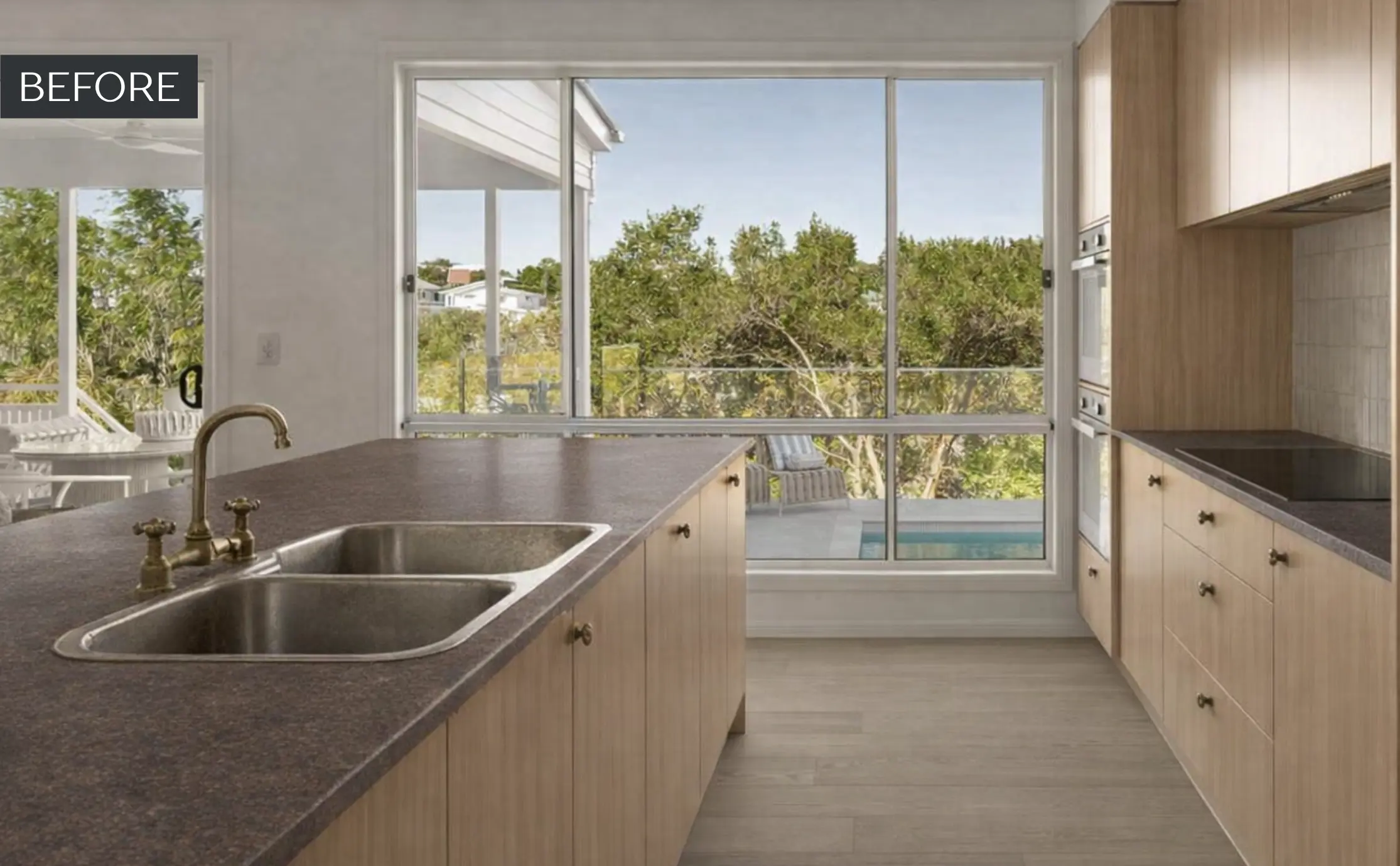
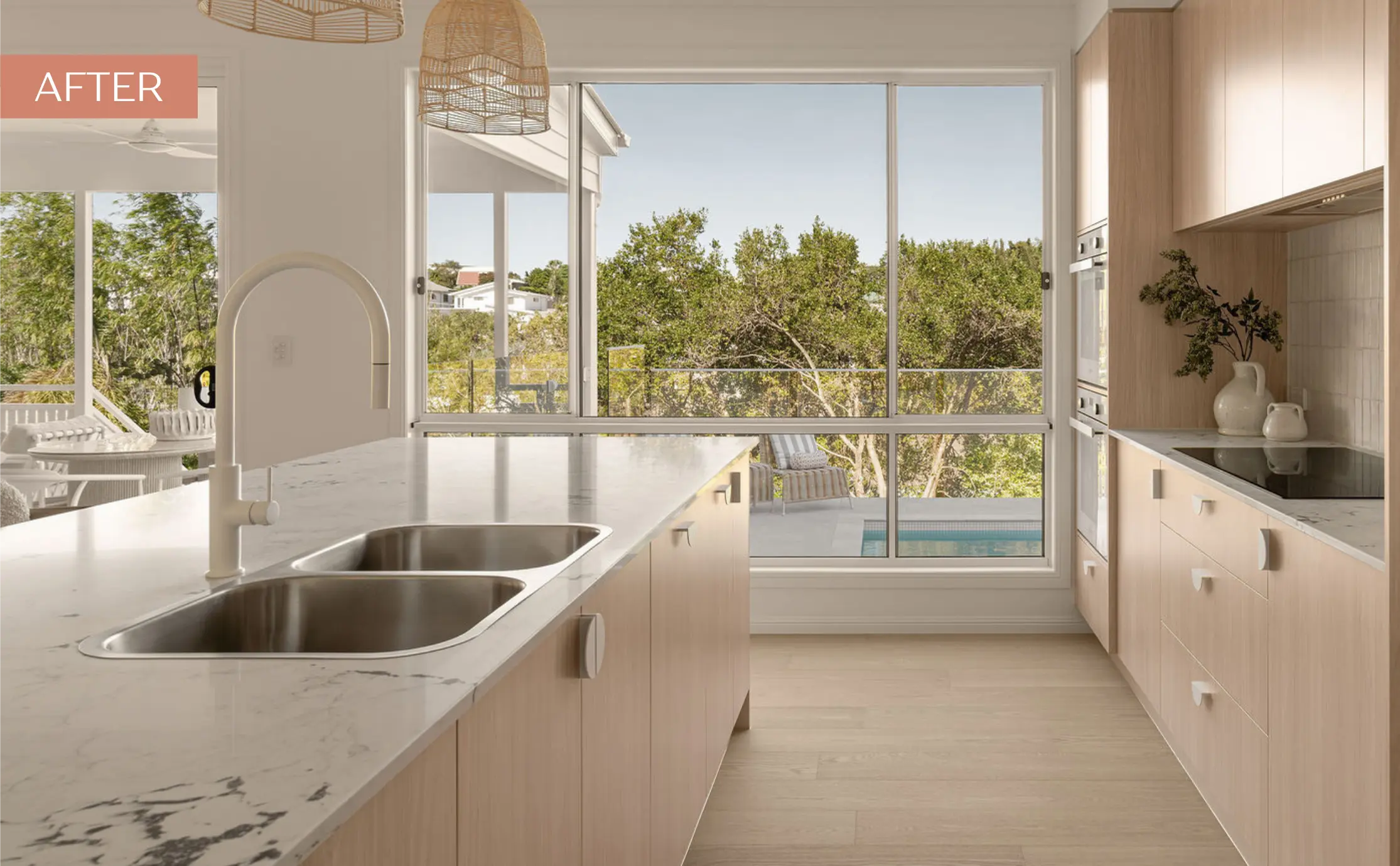
Before and after: a benchtop replacement by KAHR Co., with the cabinetry kept and the old top removed.
If the cabinets are tired too, new cabinet doors and a new splashback can go in at the same time, which is often the most cost-effective way to update a kitchen without a full renovation.
Engineered Stone Ban FAQs
When did the engineered stone ban start?
The ban on engineered stone benchtops, panels and slabs started across Australia on 1 July 2024. A ban on importing these products followed on 1 January 2025.
Do I have to remove my engineered stone benchtop?
No. Engineered stone that is already installed is safe to use as long as it is left undisturbed, and there is no requirement to remove it.
Can an engineered stone benchtop still be removed or cut?
Yes. Removal, repair and minor modification of existing engineered stone are still allowed, but the work must use dust controls. In NSW, businesses doing this processing work must notify SafeWork NSW.
Is porcelain covered by the engineered stone ban?
No. Porcelain and sintered stone are excluded from the ban as long as they do not contain resin. Natural stone is not covered either.
What benchtops does Kitchen & Home Renovations Co. install now?
Kitchen & Home Renovations Co. installs Quantum Zero, an engineered stone made without crystalline silica in 20mm or 40mm, and Quantum Porcelain in 12mm, along with other benchtop options.
How long does a benchtop replacement take?
The new benchtop is cut off-site, so you are usually without a benchtop for about a week between removing the old one and installing the new one.
See The Materials In Person
Book a free in-home design consultation and we will measure up, talk you through Quantum Zero and Quantum Porcelain, and bring samples to see in your own light. We work across the Sutherland Shire, the St George area, the Eastern Suburbs, the Inner West, the Lower North Shore, Canterbury-Bankstown and the Liverpool area.