
The Kitchen Coffee Station
Why a dedicated coffee zone has quietly become the most-requested feature in Sydney kitchen renovations — and how to design one that actually works.
Book A Design ConsultationThe coffee station — sometimes called a coffee nook or coffee bar — is the feature we're being asked about most often in design consultations at the moment. Across the Sutherland Shire, Eastern Suburbs, Inner West, and increasingly the Lower North Shore, more homeowners are asking us to carve out a dedicated coffee zone in their new kitchen or butler's pantry.
At Kitchen & Home Renovations Co., we've been designing kitchens for Sydney homeowners for over 35 years. The coffee station has gone from a niche request five years ago to something that comes up in roughly half the consultations we run out of our Taren Point showroom now. Done well, it's one of the most-used corners of the whole kitchen. Done poorly, it's a tangle of cords next to the toaster.
Here's what makes the difference.
Key Takeaways
- A kitchen coffee station works best when it's a separate zone from your main food-prep area
- The four essentials are infrastructure (power, water, waste), proper storage, considered lighting, and a benchtop that wipes clean
- The three most-requested layouts in Sydney are the butler's pantry coffee station, the tall-cabinet coffee nook, and the corner coffee bar
- Plan the infrastructure at design stage — retrofitting power points and waste solutions later is expensive and rarely tidy
Why Coffee Stations Are Taking Off In Sydney Homes
A few things have changed at once. More of us are working from home at least part of the week, so the morning coffee ritual has shifted from a café down the road to the kitchen bench. Open-plan living has made benchtop clutter much more visible — there's nowhere for the grinder, the pod machine and the milk frother to hide. And kitchens have steadily become living spaces rather than purely functional ones.
The result: a corner of the kitchen that used to be afterthought territory is now something homeowners want to plan deliberately.
The Four Rules For A Coffee Station That Actually Works
These aren't trend rules. They're the practical things we've learned from the coffee stations that clients still love two and three years after install.
Give It Its Own Zone
A coffee station should sit apart from your main food-prep area. Steam, splashes, and last night's garlic don't mix well with a morning latte. Even a small dedicated stretch of bench — 600 to 900mm wide — is enough.
Sort Power, Water And Waste Early
Plan two power points minimum (one always becomes a phone charger). Plumb in water access if the machine takes a direct feed. Build in a small bin for grounds or pods. Adding these later means cutting cabinetry.
Storage That Reflects Real Life
Open shelves photograph beautifully and collect dust quickly. Design in closed storage for cups and mugs, beans or pods, the grinder, and the milk frother. Keep one open shelf for the things you use every day — that's enough.
Lighting On Its Own Switch
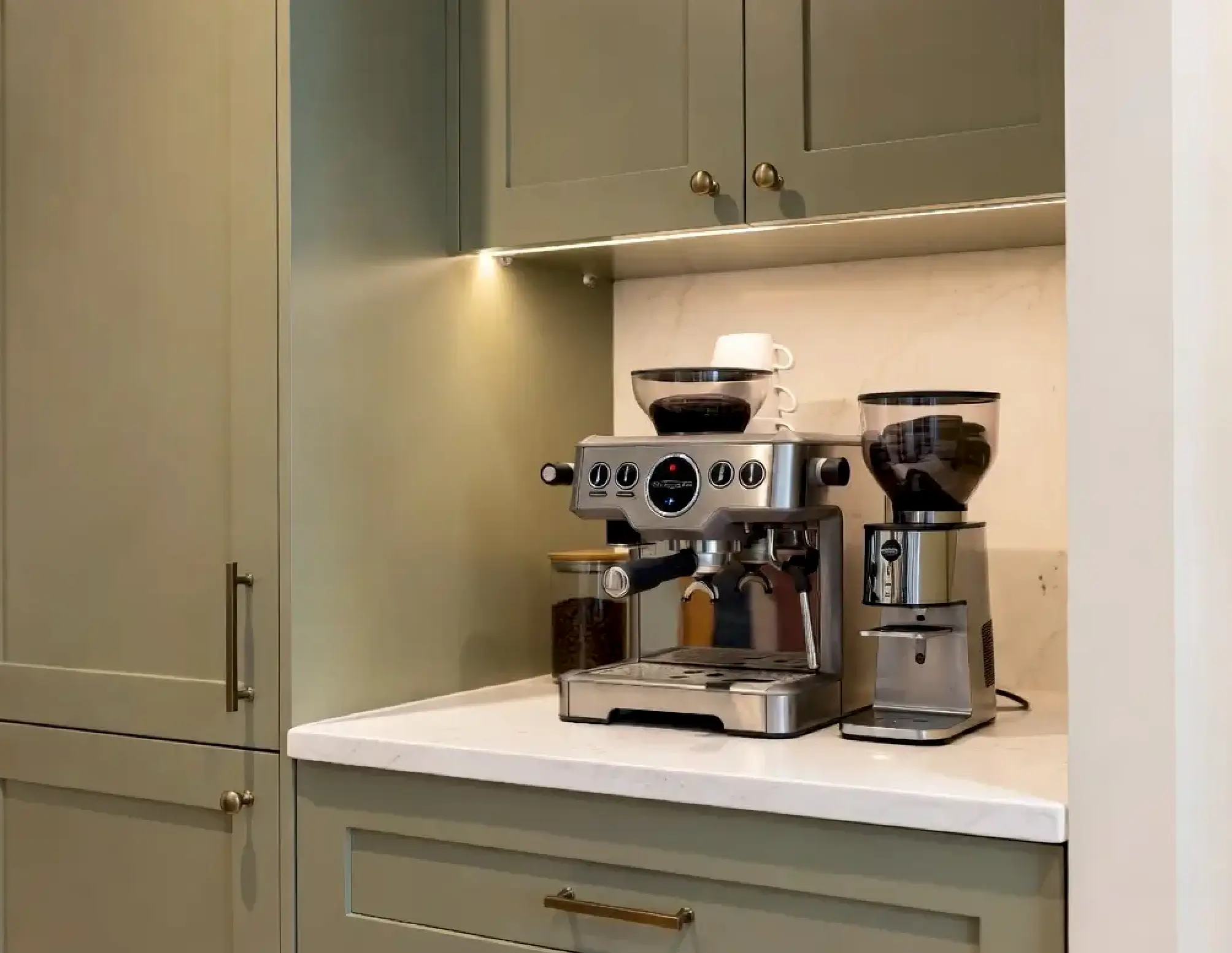
Under-cabinet lighting on a separate switch is the single detail that makes the zone feel intentional rather than functional. Warm, dimmable, and independent of the main kitchen lights.
The Three Most-Requested Coffee Station Layouts
Most of the coffee stations we build fall into one of three patterns. The right one depends on how much room you have and how visible you want the setup to be.
The Butler's Pantry Coffee Station
The most popular for clients building a butler's pantry into their renovation. The main kitchen stays visually clean while the espresso machine, grinder, and everything else live in the pantry. Works particularly well in larger Sutherland Shire and Inner West family homes where space allows for a walk-in.
The Tall-Cabinet Coffee Nook
The right answer for apartments and tighter kitchens. The coffee machine recesses into a tall cabinet with a pull-out shelf, so the bench stays clear when you're not using it. Common in our Eastern Suburbs and Lower North Shore apartment renovations.
The Corner Coffee Bar
The simplest to retrofit and our most-requested option for clients who don't want a full butler's pantry. A short run of bench at the end of the kitchen — often the cabinetry next to the fridge — gets reconfigured as a dedicated coffee zone with overhead and base storage.

Finishes That Stand Up To Daily Use
A coffee zone is a working surface. It gets splashed, steamed, and wiped down two or three times a day. Engineered stone benchtops handle this without staining or marking — most of the Quantum Zero range we use is well suited to the wear. Porcelain benchtops are another strong choice, particularly if the rest of the kitchen is already specified in porcelain.
The detail homeowners tell us they appreciate later: a wipeable splashback behind the machine. Coffee splatter is a real thing. A small section of stone, porcelain, or glass behind the espresso machine is easier to clean than painted plasterboard, and it earns its keep within the first few months.
Common Questions About Kitchen Coffee Stations
How much bench space do I need for a coffee station?
Can I add a coffee station to an existing kitchen without a full renovation?
Should the coffee station be in the main kitchen or the butler's pantry?
What's the best benchtop material for a coffee station?
Do you service my suburb in Sydney?
Let's Design A Coffee Station That Holds Up
Book a free in-home consultation with our team. We'll talk through your kitchen, your coffee routine, and where the right zone could sit.
Book A Consultation Call 02 9531 2004